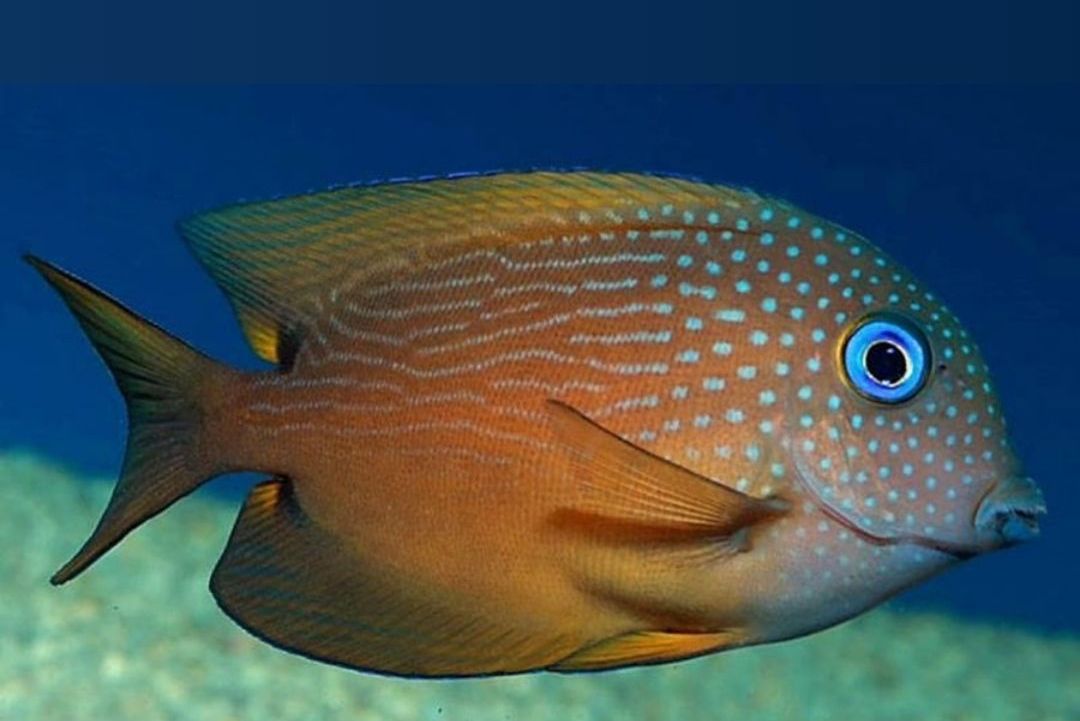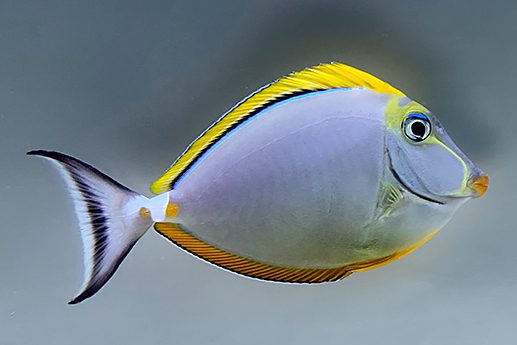
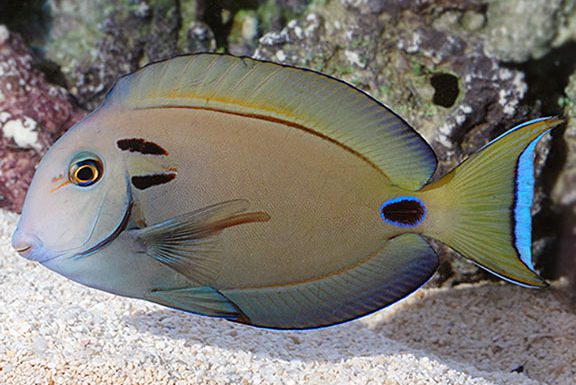
Description
Aquarium Requirements:
- Tank Size: 100 gallons (380 L) minimum for juveniles; 180+ gallons (680+ L) for adults with 6 ft (1.8 m) length preferred
- Water Parameters:
- Temperature: 72–82°F (22–28°C)
- pH: 8.1–8.4
- Salinity: 1.020–1.025 SG
- Ammonia/Nitrite: 0 ppm
- Nitrate: <20 ppm
- Water Flow: Strong, varied (10–15× tank volume per hour) with good oxygenation
- Lighting: Moderate to high (PAR 150–250) to promote algae growth on live rock
Size & Lifespan:
- Adult Size: 10–12 inches (25–30 cm)
- Lifespan: 8–15 years with proper nutrition and stable conditions
Behavior & Tank Mates:
- Diurnal, active swimmer needing ample open space and rockwork for territory and hiding
- Semi-aggressive; territorial with conspecifics or similar tangs, but peaceful with most others
- Best kept singly unless in 250+ gallons with simultaneous introductions
- Compatible with:
- Clownfish, chromis, gobies, blennies, cardinalfish
- Peaceful wrasses, dwarf angels, and other herbivores
- Avoid: other Acanthurus tangs, aggressive species, or small nano fish
- Fully reef-safe – grazes algae without harming corals or inverts
- Sharp caudal spine (“scalpel”) for defense – handle carefully to prevent injury
Diet & Feeding:
- Primarily herbivore – grazes on benthic algae, diatoms, and detritus in the wild
- Feed 3–5 times weekly in small portions, plus daily grazing access:
- Nori/seaweed or spirulina sheets on a veggie clip (primary diet)
- Algae-enriched flakes and pellets (e.g., Ocean Nutrition Formula Two, NLS AlgaeMAX)
- Blanched veggies (zucchini, spinach, lettuce) or macroalgae
- Occasional frozen mysid or brine shrimp for variety and health
- Essential: Live rock with established algae films; supplement with refugium if growth is slow
Additional Care Notes:
- Prone to Marine Ich, velvet, and HLLE – mandatory 4–6 week quarantine with UV sterilizer
- Drip acclimate slowly (2–3 hours); sensitive to parameter fluctuations
- Color shifts dramatically from juvenile yellow to adult blue-tan; fades under stress or poor diet
- Requires strong aeration and current to mimic reef conditions; avoid low-oxygen setups
- Excellent for natural algae management in reefs; reduce manual cleaning needs
- Provide caves, ledges, and grazing surfaces to minimize stress
- Protein skimmer and robust filtration recommended
- Wild-caught only – not captive-bred